AI roles for the job at hand
Support research, capture, solution development, response drafting, and review with task-specific assistance.
The DRAI platform
Use specialized AI roles, relevant data, company knowledge, and structured workflows to move a growth task from raw inputs to a result your team can review.
Inside DRAI
A short walkthrough of the actual interface: find the agent, understand the customer, draft the response.
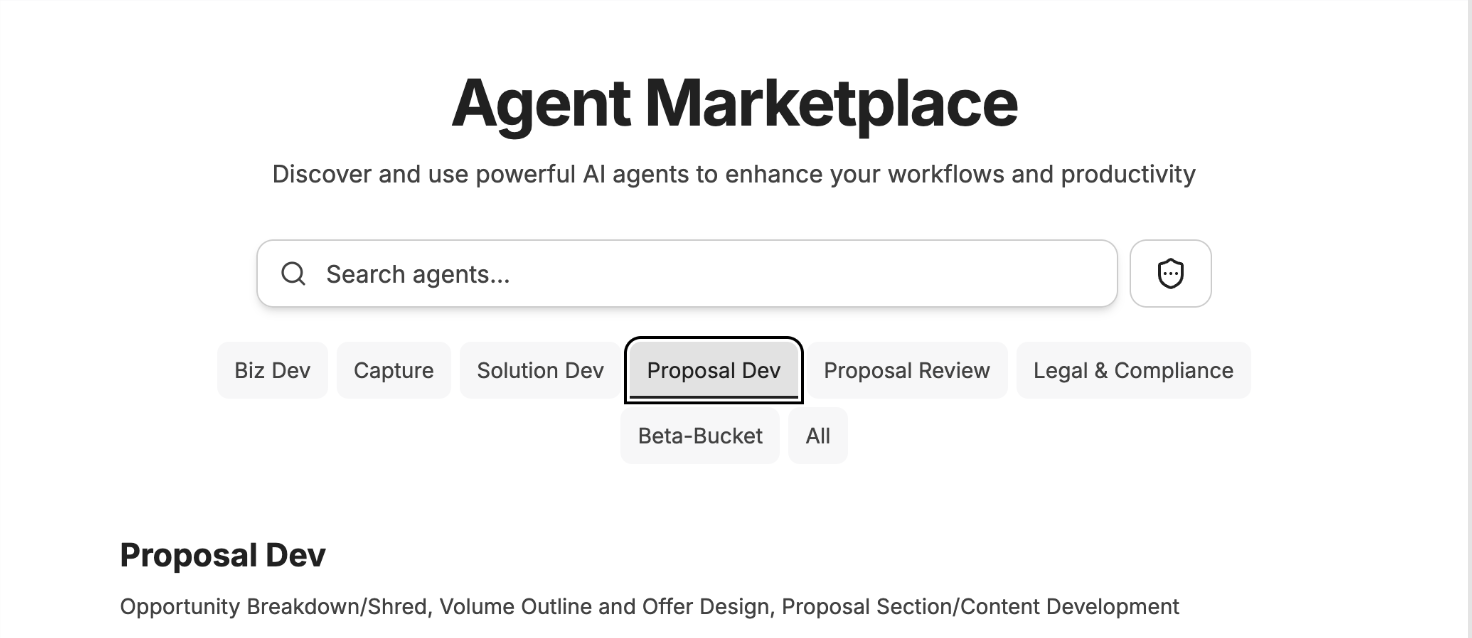
Agents are organized by GovCon function—business development, capture, solution development, proposal development, proposal review, and legal and compliance—so you start from the job, not the tool.
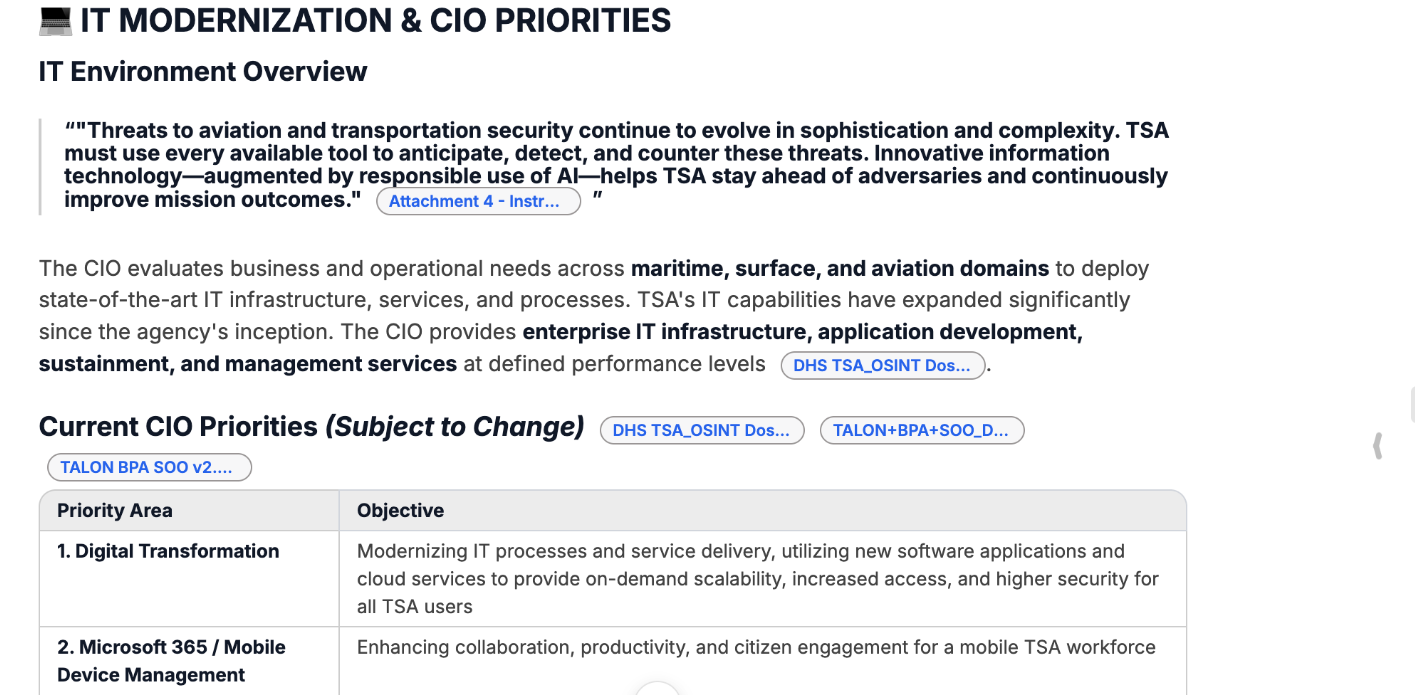
Customer research comes back organized around the agency's own stated priorities, and each claim carries a citation you can open and check.
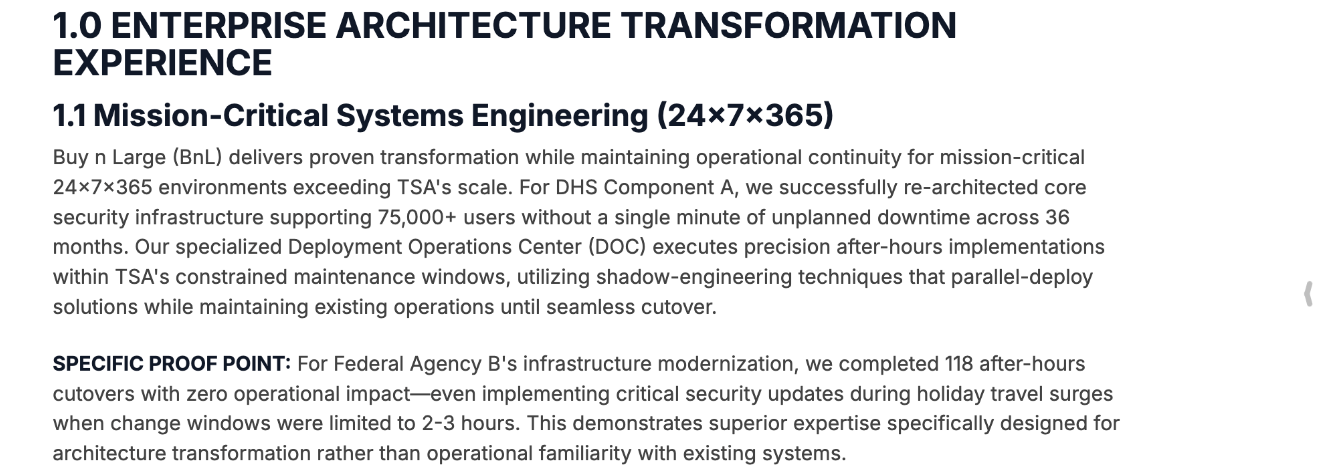
RFP Section Generator drafts one subsection at a time against the outline and your strategy. Your team checks every claim before it goes further.
The Self-Help Navigator asks what you need, points you to the right agent, and writes the prompt to start it.
The method becomes practical work
The AI Growth Blueprint describes the decisions. DRAI equips the practitioner doing the work around them.
Support research, capture, solution development, response drafting, and review with task-specific assistance.
Bring relevant public information together with the company materials your organization permits you to use.
Organize the input, analysis, draft, and review around an actual job: a qualification, customer brief, concept, response, or compliance review.
Carry sources, assumptions, decisions, and approved output into the next stage of the pursuit.
A clear division of labor
Define the decision owner before scaling the workflow.
| Work | AI assistance | Your team's authority |
|---|---|---|
| Pursuit readiness | Scan the market, score fit, and assemble evidence and unknowns. | Approve pursuit investment or decide to stop. |
| Customer understanding | Find and synthesize public evidence, and play the customer to test ideas. | Interpret the context and validate it with the customer. |
| Solution development | Map requirements, compare concepts, and test the price. | Approve feasibility, price, and delivery commitments. |
| Market responsiveness | Structure the response and flag unsupported claims. | Choose which requests merit a response and approve every claim. |
| Message architecture | Shred the solicitation, plan the volume, and draft sections. | Approve the message, the page allocation, and every claim. |
| Review and compliance | Build the requirements matrix and score drafts the way the evaluator will. | Resolve every gap and authorize submission. |
Fit before rollout
Start with one workflow. Discuss the roles, company knowledge, data connections, and support needed to make it repeatable across your team.
Explore pricing and scopeUse a specific business job as the starting point for scoping. Define its inputs, outputs, evidence, and decision owner before choosing the automation.
Prepare a scope discussionTest the work
Start with the customer or opportunity you know best. Inspect the sources, challenge the reasoning, and decide whether the work is useful.